---
title: "我用 15 条 prompt,把编码账单从 $7,800 砍到 $129"
author: "Dep (@0xDepressionn)"
source_url: "https://x.com/0xDepressionn/status/2062185806999994444"
published_at: "2026-06-03T14:53:04.000Z"
fetched_at: "2026-06-05"
updated_at: "2026-06-05"
language: zh
review_status: draft
---
有个跑 AI 工作流的团队,光 Claude Opus 一项每月就花掉 $62,000。
他们没做错什么。Opus 4.8 确实出色。它能推理复杂问题、应对模糊地带、产出经得起推敲的结果。他们什么都用它:调研、起草、分析、摘要、批处理。
后来他们发现,Claude Opus 4.8 新出的 Dynamic Workflows(动态工作流)功能是为一件很具体的事设计的:在数百个并行子 agent 之间编排复杂任务。
不是执行这些任务,是编排它们。
他们把执行层挪到了 Kimi K2.6 Agent Swarm。一样的产出质量,一样的规模,每月 $7,800。
差出来 $54,200/月,也就是 $650,400/年。
下面是这套系统的全貌。
---

---
### 大多数团队没看懂的搭法
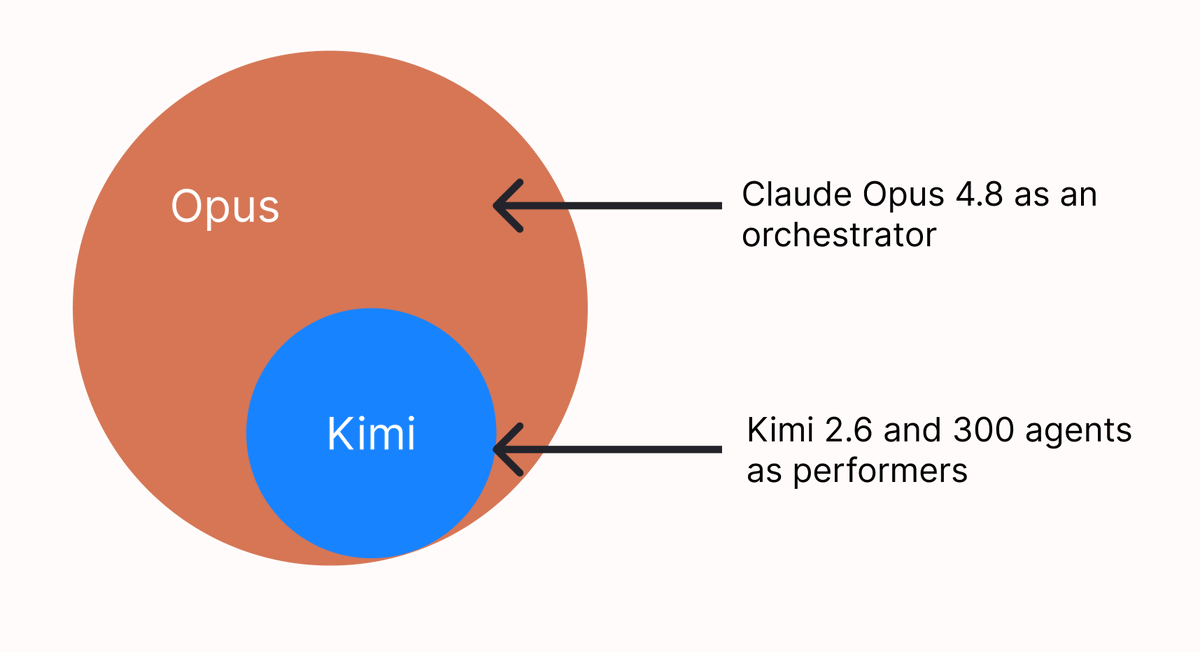
Claude Opus 4.8 和 Kimi K2.6 不是互相竞争的工具,它们也不能互换。
Opus 4.8 是个策略者。它做规划、做推理、做判断、综合复杂信息,并在长任务里守住质量标准。Anthropic 专门做了 Dynamic Workflows,就是为了让 Opus 能管理数百个并行子 agent 而不丢失连贯性。
Kimi K2.6 是个执行者。它并行跑 300 个专精子 agent,协调 4,000 个步骤,处理大批量任务,并产出实打实的文件。它在 SWE-Bench Pro 上拿了 58.6%。它的价格是每百万 tokens $0.60。
那个烧钱的错误:什么都往 Opus 4.8 上路由,可 Opus 是用来指挥的,不是用来干活的。
正确的搭法:Opus 4.8 当大脑,Kimi K2.6 Agent Swarm 当双手。
三个部分,十五条 prompt。这套工作流每月省下 $54,000。
---
### 1 / 3 | 编排:Opus 4.8 真正为之而生的事
Claude Opus 4.8 自带三样东西,大多数团队都还没碰过。
Dynamic Workflows:Opus 在数百个并行子 agent 之间管理复杂任务的执行。它分派工作、跟踪依赖关系、把阻塞点摆到台面上,并在产出不符合预期时调整计划。
Effort Controls(投入控制):Opus 4.8 自己决定每个任务花多少算力。简单的路由决策,它只用最低投入。可能波及下游 300 个 agent 的质量判断,它用最大推理量。同一个会话,自动切换。
Extended Independence(延长自主):Opus 4.8 能跑更久而不需要中途汇报。它会主动标出不确定的地方。一个 13 小时的自主工作流,不再需要你头两个小时盯着看。
这些都不要求 Opus 去执行实际工作。它要求 Opus 把该发生什么想清楚,并确保它真的发生。
五条 prompt。让 Opus 4.8 作为编排层运行。
---
---
**→ Prompt 1:把 Opus 4.8 当项目规划者:**
```
I need to execute the following project using multiple AI agents:
Project: [describe the full outcome you need]
Scale: [number of items / files / tasks]
Quality standard: [what good output looks like]
Constraints: [deadline, format, restrictions]
Your job is to build the execution plan, not execute it.
Produce:
1. The breakdown of work into parallel streams
2. The dependencies between streams (what must happen before what)
3. The quality checkpoints where output must be reviewed before continuing
4. The exact brief for each execution stream (what each agent needs to know to do its part)
5. The final assembly instructions (how the outputs combine into the finished deliverable)
Do not write any of the actual content. Only the plan.
```
**→ Prompt 2:Dynamic Workflow 任务路由:**
```
I have the following tasks to complete this week:
[list your tasks]
Sort them into two groups:
Group A — Opus handles (reasoning-heavy, judgment calls, ambiguous, high-stakes):
[Opus-level criteria: architecture decisions, quality reviews, strategic analysis, anything where being wrong has downstream consequences]
Group B — Kimi Agent Swarm handles (execution-heavy, batch processing, repetitive at scale, clear output spec):
[Kimi-level criteria: researching N sources, producing N files, transforming N inputs, any task where the output spec is clear and the work is parallel]
For each Group B task, write the exact project brief that Kimi Agent Swarm will receive.
For each Group A task, work through it directly.
```
**→ Prompt 3:执行前先定义质量标准:**
```
Kimi Agent Swarm is about to execute the following project:
[describe the project]
Before it runs, I need a quality rubric.
Define:
1. What a passing output looks like for each deliverable type
2. What a failing output looks like (be specific — not "low quality" but "missing citations," "under 500 words," "wrong format")
3. The 3 most common failure modes for this type of task
4. How to catch each failure mode in the output before it reaches the final assembly stage
This rubric will be used to review Agent Swarm outputs before they are accepted.
```
**→ Prompt 4:Opus 复审 Kimi 的产出:**
```
Kimi Agent Swarm completed the following project:
Project brief: [what was asked]
Output: [paste or summarize the output]
Review against the quality rubric:
[paste the rubric from Prompt 3]
For each deliverable:
- Pass or fail against each rubric criterion
- Specific issues that need to be fixed (quote the exact problem)
- Whether the issue requires a full re-run or a targeted fix
Produce a revision brief: exactly what Kimi needs to fix, in the same project brief format, so it can be sent directly without re-explanation.
```
**→ Prompt 5:Opus 把 Kimi 的零件组装成最终产物:**
```
Kimi Agent Swarm produced the following outputs:
[list or paste the outputs]
These are the components of: [describe the final deliverable]
Your job is to assemble them into a coherent final output.
Rules:
- Do not rewrite what works. Connect and integrate.
- Identify and fix inconsistencies between sections
- Ensure the final output reads as one unified piece, not a compilation
- Flag anything that requires my review before finalizing
Final format: [describe exactly what the assembled output should look like]
```
> Opus 4.8 按 $15/1M tokens 计,只做编排(占工作流 30%):$18,600/月 Kimi K2.6 按 $0.60/1M tokens 计,做执行(占工作流 70%):$1,240/月 对比全程用 Opus 4.8:$62,000/月 每月省下:$42,160
---
### 2 / 3 | 执行:Opus 在做规划时,Kimi K2.6 Agent Swarm 在做什么
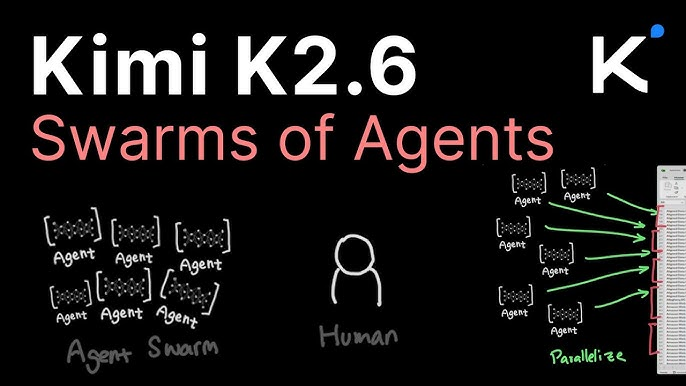
Kimi K2.6 Agent Swarm 并行跑 300 个领域专精的子 agent。每一个负责项目简报里的一块。它们跨多达 4,000 个步骤相互协调。产出以实打实的文件交付:PDF、电子表格、网站、数据集、代码。
当 Opus 把简报交接过来时,这一套替代掉的东西,算成钱是这样的现实:
一份覆盖 50 个竞品落地页的调研简报:找代理机构要 $25,000。Kimi 执行它只花 $4-6 的 tokens。
从潜客名单里批量做 100 封量身定制的触达邮件:找文案要 $2,000-5,000。Kimi 一口气就把 Opus 定义好的简报执行完。
横跨 30 个代码库的技术审计:付给顾问 $15,000-40,000 的工时。Kimi Agent Swarm 跑 Opus 定义的规格,Opus 复审摘要。
这套组合:Opus 定下质量标准。Kimi 大规模执行。Opus 复审。Kimi 修订。Opus 批准。
五条 prompt,用来跑执行层。
---
---
**→ Prompt 6:把 Opus 的计划翻译成 Kimi 的项目简报:**
```
Take the following execution plan produced by Claude Opus:
[paste Opus plan from Prompt 1]
Rewrite it as a Kimi Agent Swarm project brief.
Format:
Project: [one line summary]
Input: [files, URLs, data attached]
Output: [file type / count / naming convention / format]
Phase 1: [first execution stream — what agents do, what they produce]
Phase 2: [second stream — dependencies noted]
Phase 3: [assembly — how outputs combine]
Quality note: [the minimum standard each output must meet]
The brief should be complete enough that Agent Swarm can execute without clarification.
```
**→ Prompt 7:带输出规格的批量执行:**
```
Project: [describe the batch task]
Input: [N items — attach files or list them]
Output spec: [exact format, file type, naming convention, one output per input]
For each input:
- [step 1 of what to do]
- [step 2]
- [step 3]
- Output: [exact format of the deliverable]
Quality standard: [minimum requirement — word count, citation format, structure, etc.]
Run all [N] inputs in parallel. Deliver as [file format] named [convention].
```
**→ Prompt 8:从调研到交付一次走完:**
```
Research phase:
Search for [topic / competitor / subject] across [N] sources.
For each source extract: [list of specific data points]
Output: structured dataset with one row per source.
Analysis phase:
Using the research dataset, identify: [patterns / gaps / opportunities / rankings]
Flag any source where the data is unclear or contradictory.
Deliverable phase:
Produce [final output format] using the research and analysis.
Format: [exact specification]
Length: [word count or page count]
Citations: [style]
Total output: one [file type], one supporting dataset.
```
**→ Prompt 9:把工作流存成可复用的 Skill:**
```
We just completed the following workflow:
Opus defined: [what Opus planned]
Kimi executed: [what Kimi ran]
Output: [what was produced]
Save this as a reusable Skill called [name].
Document:
- The trigger (what kind of request activates this skill)
- The Opus orchestration prompt (what to send Opus to generate the brief)
- The Kimi execution brief template (what gets sent to Agent Swarm)
- The Opus review checklist (what Opus checks before accepting output)
- Expected inputs and outputs
Next time we run this workflow, I want to start from the Skill, not from scratch.
```
**→ Prompt 10:按每次工作流运行追踪成本:**
```
This workflow just ran:
Opus 4.8 tasks:
[list each task Opus handled, estimated token count]
Kimi K2.6 tasks:
[list each task Kimi handled, estimated token count]
Calculate:
- Opus cost: [tokens] × $0.015 per 1K tokens
- Kimi cost: [tokens] × $0.0006 per 1K tokens
- Total actual cost
- What this workflow would have cost running entirely on Opus
- Savings this run
Log this to WORKFLOW_COSTS.md with date, workflow name, and breakdown.
```
> 50 个竞品落地页(人工调研):$25,000 100 封量身定制的触达邮件(文案):$2,000-5,000 30 个代码库的技术审计(顾问):$15,000-40,000 用 Opus 出质量简报、Kimi 执行:每个工作流 $12-40 的 tokens
---
### 3 / 3 | 这套系统:把账单砍掉 88% 的路由决策
那些从 $62,000/月 做到 $7,800/月 的团队,不是拿 Kimi 取代了 Opus。
他们搭了一个路由层。
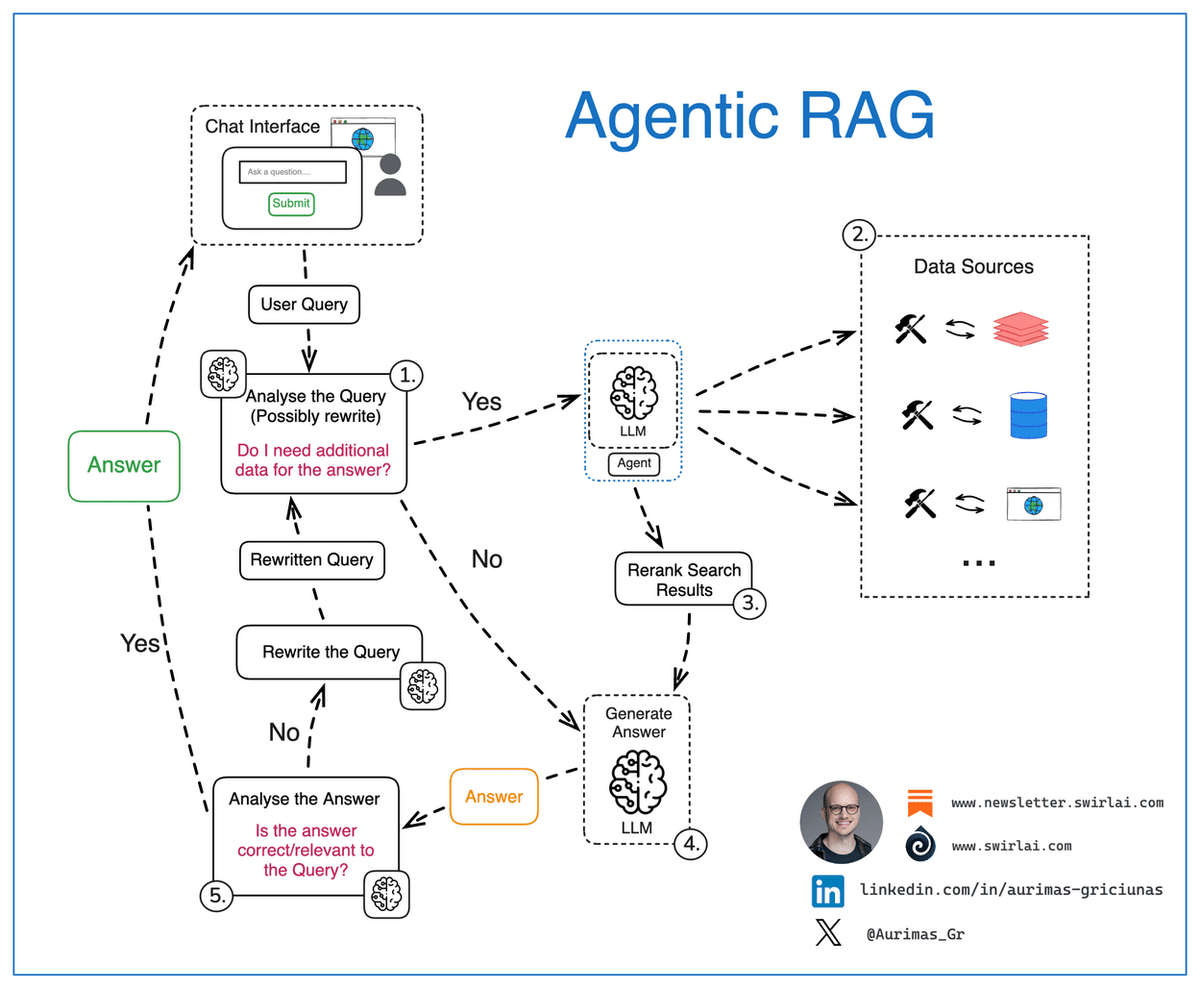
每一个进入工作流的任务都会被分类:这件事需要判断,还是需要执行?答案决定了由哪个模型来处理它。
判断:模糊的简报、质量决策、架构抉择、综合相互矛盾的信息,以及任何一旦做错就会在下游层层放大的事。Claude Opus 4.8。
执行:清晰的输出规格、可大规模重复、量大、质量判定标准是确定性的,以及任何「简报已经把『好』的样子完整定义清楚」的事。Kimi K2.6 Agent Swarm。
这条路由规则:如果你能写出一份机器就能照着打分的评分标准,就交给 Kimi 执行。如果你写不出这份标准,就交给 Opus 处理。
五条 prompt,完整的路由系统。
---
---
**→ Prompt 11:每周工作流审计:**
```
Review the following workflows we ran this week:
[list workflows]
For each workflow, classify every task:
- Opus-only: judgment-heavy, no clear rubric
- Kimi-only: execution-heavy, clear output spec, parallel-friendly
- Hybrid: Opus plans + Kimi executes + Opus reviews
For each Hybrid workflow, write the handoff points:
- What Opus produces before handoff (the brief)
- What Kimi receives (the execution spec)
- What Opus reviews after (the quality rubric)
Flag any task currently on Opus that should move to Kimi.
```
**→ Prompt 12:搭一棵路由决策树:**
```
I need a routing framework for our recurring workflow types.
For each workflow type below, define:
1. Which model handles each stage (Opus / Kimi / both)
2. The trigger that routes it to the right model
3. The handoff format between models
4. The cost estimate per run
Workflow types:
- [type 1, e.g. content research + production]
- [type 2, e.g. competitor analysis]
- [type 3, e.g. outreach personalization]
- [type 4, e.g. code review + refactor]
Output: a routing table I can use to classify any incoming request in 30 seconds.
```
**→ Prompt 13:每月成本优化复盘:**
```
Last month we ran the following volume through our AI workflow:
[describe volume — e.g. 200 research briefs, 500 outreach emails, 30 code audits]
Current setup: [describe what goes to Opus vs Kimi currently]
Current monthly cost: [amount]
Analyze:
1. Which workflows are over-allocated to Opus that Kimi could handle
2. Which workflows are currently on Kimi that Opus should be handling for quality
3. What the optimal split would look like
4. Projected cost at the optimal split
Produce a routing change recommendation with estimated monthly savings.
```
**→ Prompt 14:交接 prompt 模板:**
```
Create a standard handoff template for the following workflow:
When Opus completes [task type], it produces [output format].
Kimi Agent Swarm receives this and executes [execution task].
Opus then reviews [review criteria].
Write:
1. The Opus output format that serves as the Kimi brief (structured, no ambiguity)
2. The Kimi execution brief template (slots for Opus to fill in)
3. The Opus review checklist (5 criteria Kimi's output is graded against)
4. The revision loop: if Kimi output fails, what gets sent back and in what format
This template becomes the permanent interface between the two models for this workflow type.
```
**→ Prompt 15:给利益相关方的 ROI 报告:**
```
Produce a monthly ROI report for our Opus 4.8 + Kimi K2.6 workflow setup.
Include:
1. Total workflows run this month: [N]
2. Volume processed: [N items / files / tasks]
3. Cost breakdown:
- Opus 4.8 spend: $[amount]
- Kimi K2.6 spend: $[amount]
- Total: $[amount]
4. Equivalent cost running all workflows on Opus 4.8 alone: $[calculated amount]
5. Monthly saving: $[amount]
6. Annualized saving: $[amount × 12]
7. Quality incidents (workflows that failed review and required re-run): [N]
8. Quality incident rate: [%]
Format as an executive summary. One page. Numbers first.
```
> $62,000/月 全程用 Opus 4.8 跑所有工作流 $7,800/月 Opus 做编排、Kimi 做执行 每月省下:$54,200 每年省下:$650,400 这套搭法下的质量事故:持平或更低(所有最终产出都由 Opus 复审)
---
### 结语
下面是 2026 年 5 月 28 日发生的变化。
Anthropic 发布了带 Dynamic Workflows 的 Claude Opus 4.8。它是为在数百个并行子 agent 之间管理复杂任务执行而设计的。不是去当那些子 agent,而是去管理它们。
Kimi K2.6 自带 Agent Swarm。300 个专精子 agent。4,000 个协调步骤。每百万 tokens $0.60。
这不是相互竞争的模型。它们是为同一套系统的不同层而造的。
> Opus 4.8 编排层(占工作流 30%):$18,600/月 Kimi K2.6 执行层(占工作流 70%):$1,240/月 合计:$19,840/月 对比全程用 Opus 4.8:$62,000/月 每年省下:$650,400
那些在四月和五月就想明白这一点的团队,如今跑的 AI 基础设施每月成本 $7,800,产出的却是过去要花 $62,000 才能做出来的东西。还没想明白的团队,仍然在为那些根本用不着它的任务,把一切都往市场上最贵的模型上路由。
15 条 prompt。两个模型。这套便宜了 88% 的工作流,既不更慢,也不更差。
它产出的是同样的东西,而价格,本就该是这个数。
---
趁这条还没被淹没,先收藏。如果有用,转给一个需要它的人。