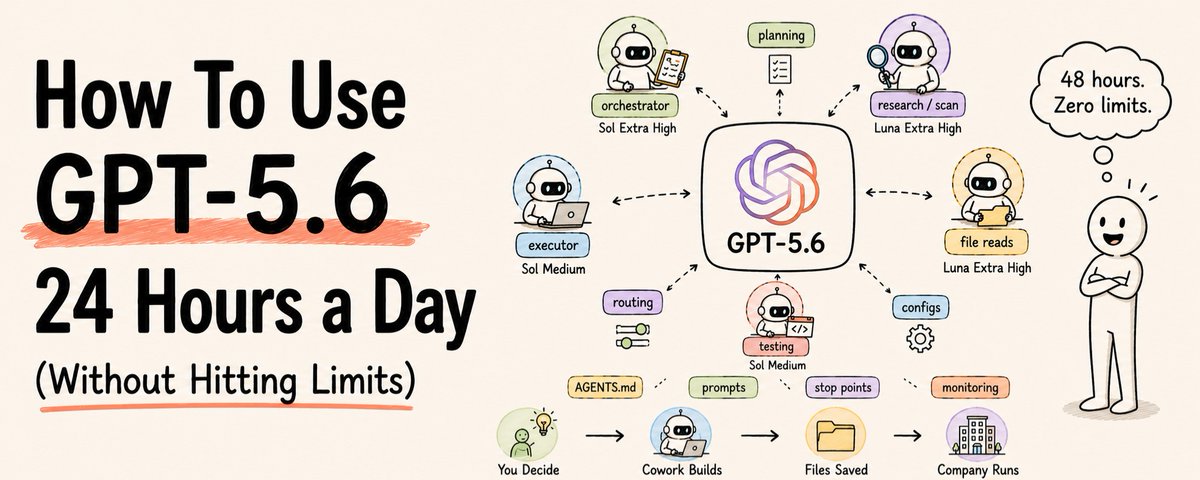
你花了 200 美元买 Codex Pro。
4 小时就撞上了限额。
5 小时窗口里的 4 小时,就这么没了。
最糟的是?
其中大多数消耗本来完全可以避免。
为了搞明白这件事,我在 GPT-5.6 Sol 上烧掉了价值超过 20 万美元的 token。
这里是我学到的一切——这样你就不用再自己烧一遍了。
━━━━━━━━━━━━━━━━━━
为什么你的限额烧得这么快
一个设置。一个 bug。代价是全部限额。

当 Codex 启动 subagent 时,它会精确复制父 agent 的模型。
把 Sol 设成 Ultra?每个 subagent 也都会跑 Sol Ultra。一个任务里 3 个 subagent = 3 个 Sol Ultra 实例同时燃烧。
这就是为什么你的 5 小时窗口会在 90 分钟内消失。
Codex 的 spawn_agent 工具没有选项,可以为子 agent 选择不同模型。
它只是克隆你当前正在运行的东西。
这不是你的错。这是系统里的路由缺陷。
但现在你知道了。而且有办法修。
━━━━━━━━━━━━━━━━━━
永远不要碰的模型

Ultra。
它不是一个推理等级。它是一个倍增器。
Ultra 会在一次 agent 调用里启动 4 个并行的子子 agent。
在一个简单任务上:subagent 启动 subagent,subagent 再启动更多 subagent。
递归。失控。贵到毁灭性。
性能差距呢?
Sol Ultra 在 coding benchmark 上得分 91.9%。Sol Extra High 得分 88.8%。
多 3.1 分。成本 3 倍。
OpenAI 甚至没有公布 Ultra 在两个主要 coding benchmark 上的结果。
这已经说明一切了。
完全避开 Ultra。就这么简单。
━━━━━━━━━━━━━━━━━━
修好一切的 3 模型系统
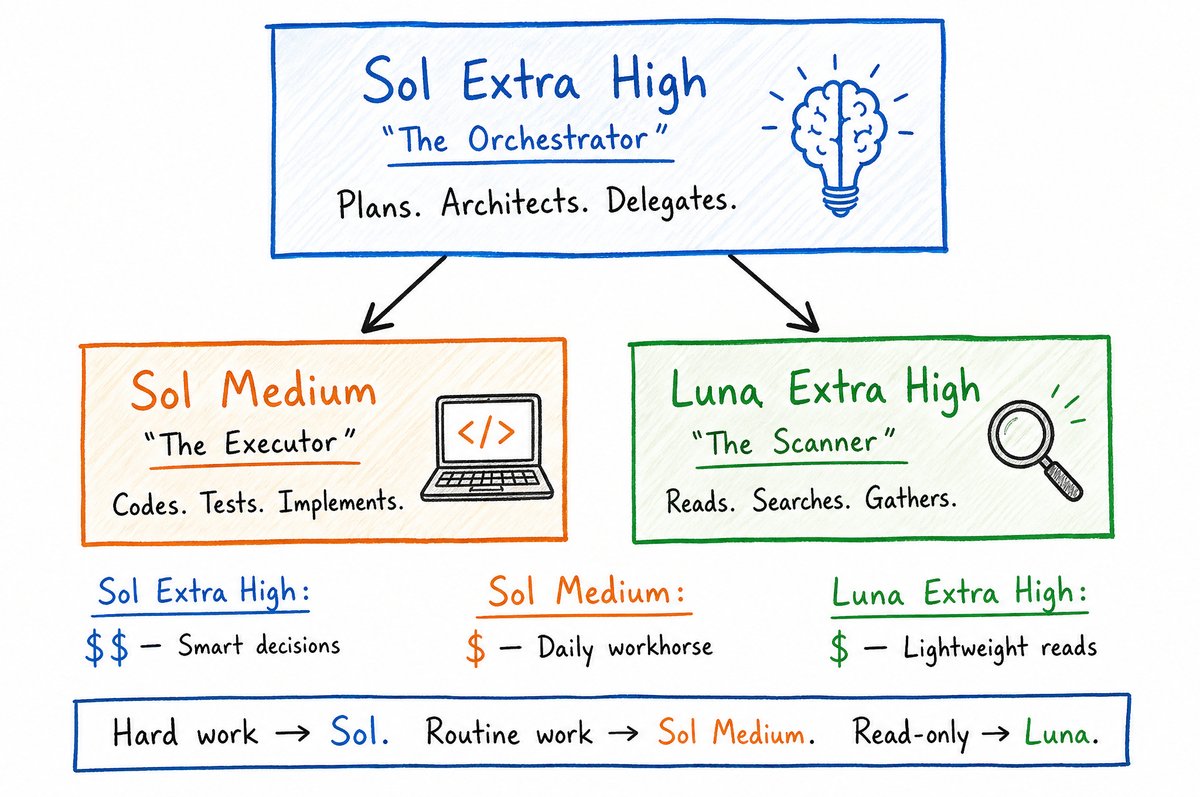
你需要三个 agent 做三种不同的工作。
不是让一个模型用最大功率干所有事。
Sol Extra High → 编排者
规划。架构设计。委派任务。做困难决策。
这是你的主脑。它读取你的 prompt,判断需要发生什么。
Extra High 在 benchmark 上给你 58/100。Max 给你 59/100。只差 1 分。便宜 3 倍。
这里 Extra High 才是正确选择。
Sol Medium → 执行者
写代码。修 bug。跑测试。实现计划。
在长时间运行的 agent 工作流上,Sol Medium 仍然比 Claude Fable 5 高 11.4 分。
成本大约只有四分之一。
它不需要做架构决策。它只需要很好地执行指令。Medium 完全做得到。
Luna Extra High → 扫描器
文件搜索。代码库探索。轻量读取。收集证据。
Luna Extra High 是:
→ 比 Terra 快 1.3 倍
→ 比 Terra 便宜 2.5 倍
→ 在轻量任务上性能相同
这是大多数人会错过的隐藏优选。
Luna 纸面上看很便宜(每百万 token 1 美元 / 6 美元),但会烧掉更多步骤。
到了 Extra High,步骤数会降下来。它就成了只读工作的显然选择。
━━━━━━━━━━━━━━━━━━
Sol + Luna 路由技巧(48 小时,零限额命中)

下面是可以持续运行、又不会烧掉窗口的精确设置:
→ Sol Extra High 写计划
→ Luna Extra High 执行计划
→ Sol Extra High 审查输出
就是这样。
一个循环。没有递归启动。没有后台燃烧的 Ultra 克隆。
分享这个方法的人连续跑了 48 小时,一次都没有撞到 5 小时限额。
它之所以有效,是因为 Sol 专注于决策。Luna 以便宜 2.5 倍的价格处理 token 密集的执行工作。即使你做得更多,总 token 消耗也会大幅下降。
现在就加到你的 AGENTS.md 里的设置:
Only spawn subagents when I explicitly ask you to.
Do not spawn subagents automatically.
这会阻止 Sol 在每个任务上都急着启动 agent。
把它加到你的全局 AGENTS.md,然后重启 Codex。
━━━━━━━━━━━━━━━━━━
5 分钟修好你的 config.toml
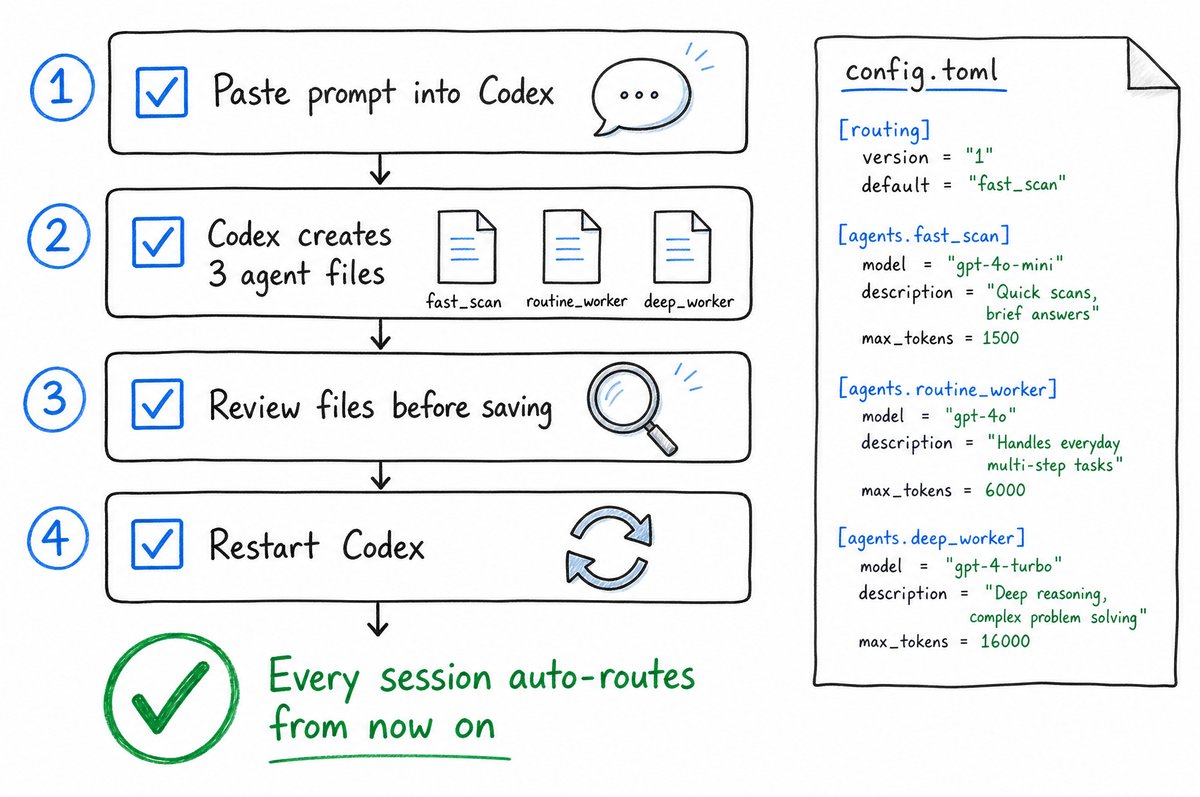
这是真正控制一切的文件。
Codex 启动时会读取它。
设置一次。之后每个 session 都会自动路由。
打开 Codex。原样粘贴下面这个 prompt:
Read my current ~/.codex/config.toml and the docs at https://developers.openai.com/codex/subagents* for custom agent definitions.*
Then do the following:
1. Create three agent TOML files under ~/.codex/agents/:
fast_scan — for quick searches, codebase exploration, file reads, and lightweight analysis. - model: gpt-5.6-luna - model_reasoning_effort: extra-high - sandbox_mode: read-only - Instructions: gather evidence quickly, return a concise summary, do not edit files.
routine_worker — for routine coding, tests, documentation, and bounded fixes. - model: gpt-5.6-sol - model_reasoning_effort: medium - Instructions: implement the assigned task and verify the result.
deep_worker — for difficult debugging, architecture, security, and ambiguous multi-step work. - model: gpt-5.6-sol - model_reasoning_effort: extra-high - Instructions: handle complex work carefully, validate assumptions, provide strong verification.
2. Update the [agents] section of my config.toml with this routing policy:
"Automatically decide whether delegation is useful. Choose fast_scan for lightweight read-only work, routine_worker for normal implementation, and deep_worker for complex or high-risk reasoning. Do not ask the user to choose a model unless the required model is unavailable. Keep simple tasks on the main agent."
3. Make sure max_threads = 6 and max_depth = 1 are set under [agents].
4. Show me the final config.toml and all three agent files so I can review before you save."
Codex 会创建所有文件。你审查。你保存。完成。
━━━━━━━━━━━━━━━━━━
你的 3 个 agent 文件应该长什么样

Codex 会根据上面的 prompt 自动生成这些文件。
下面是它们应该呈现的样子——这样你知道该审查什么:
# ~/.codex/agents/fast-scan.toml
name = "fast_scan"
description = "Quick searches, codebase exploration, lightweight read-only analysis."
model = "gpt-5.6-luna"
model_reasoning_effort = "extra-high"
sandbox_mode = "read-only"
developer_instructions = """
Gather evidence quickly and return a concise summary.
Do not edit files.
"""
# ~/.codex/agents/routine-worker.toml
name = "routine_worker"
description = "Routine coding, tests, documentation, and bounded fixes."
model = "gpt-5.6-sol"
model_reasoning_effort = "medium"
developer_instructions = """
Implement the assigned bounded task and verify the result.
"""
# ~/.codex/agents/deep-worker.toml
name = "deep_worker"
description = "Difficult debugging, architecture, security, and ambiguous multi-step work."
model = "gpt-5.6-sol"
model_reasoning_effort = "extra-high"
developer_instructions = """
Handle complex work carefully, validate assumptions,
and provide strong verification.
"""
# ~/.codex/config.toml — [agents] section
[agents]
max_threads = 6
max_depth = 1
routing_policy = """
Automatically decide whether delegation is useful.
Choose fast_scan for lightweight read-only work,
routine_worker for normal implementation,
and deep_worker for complex or high-risk reasoning.
Do not ask the user to choose a model.
Keep simple tasks on the main agent.
"""
max_depth = 1 很关键。
它会阻止 subagent 再启动自己的 subagent。
只允许一层委派。没有递归启动。没有失控燃烧。
━━━━━━━━━━━━━━━━━━
如何写 prompt 才不会烧掉限额

模型会一直做下去。
继续做。
再继续做。
5.6 可以不停下来,把任务端到端完成。这大多是好事。
但如果没有清晰的停止点,它会做过头。重写不需要重写的东西。一个本来只需要 3% 窗口的任务,烧掉你 15% 的窗口。
给每个 prompt 都加上停止点:
用于规划任务:
Build this new feature.
Start by writing a plan only.
When the plan is done, stop and ask for my feedback.
Do not write any code yet.
用于实现任务:
The plan looks great. Build it out now.
Use computer use to test as you go.
Keep going until tests pass and you're satisfied.
Open a PR when done.
Stop after the PR is open. I'll handle reviews from there.
用于调试:
Fix the bug in auth.ts.
Read the file first. Write your diagnosis.
Stop and show me the diagnosis before making changes.
I'll confirm before you proceed.
模式是:准确告诉它什么时候停。
不要含糊。不要说“自行判断”。
明确检查点。清晰地把控制权交回给你。
━━━━━━━━━━━━━━━━━━
Effort 等级指南
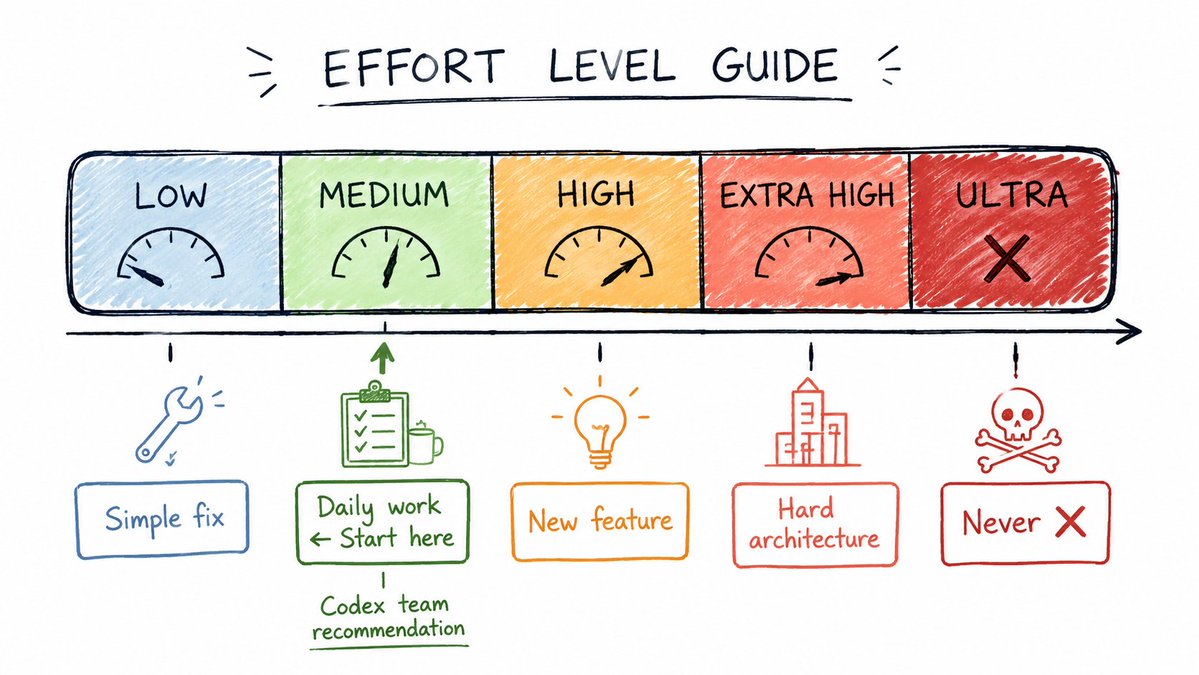
不是所有任务都需要同样的马力。
→ Low / Medium —— 常规任务、简单修复、文档、测试
→ High —— 功能、多文件修改、调试
→ Extra High —— 架构决策、安全审查、复杂多步骤工作
→ Max —— 留给你已经失败过的真正困难问题
→ Ultra —— 避免。永远避免。
大多数开发者的默认选择:High。
它已经足够强。High 上的 subagent 在消耗上“还不算太糟”。
Codex 团队给出的日常主力推荐:Sol Medium。
Sol Medium 在 agent benchmark 上超过 Claude Fable 5。价格只是零头。
你不需要所有事情都用 Extra High。
Effort level cheat sheet:
Simple fix → Sol Low or Medium
New feature → Sol High
Hard problem → Sol Extra High
Fast scan → Luna Extra High
Never → Ultra
━━━━━━━━━━━━━━━━━━
解释一切的 benchmark 数字
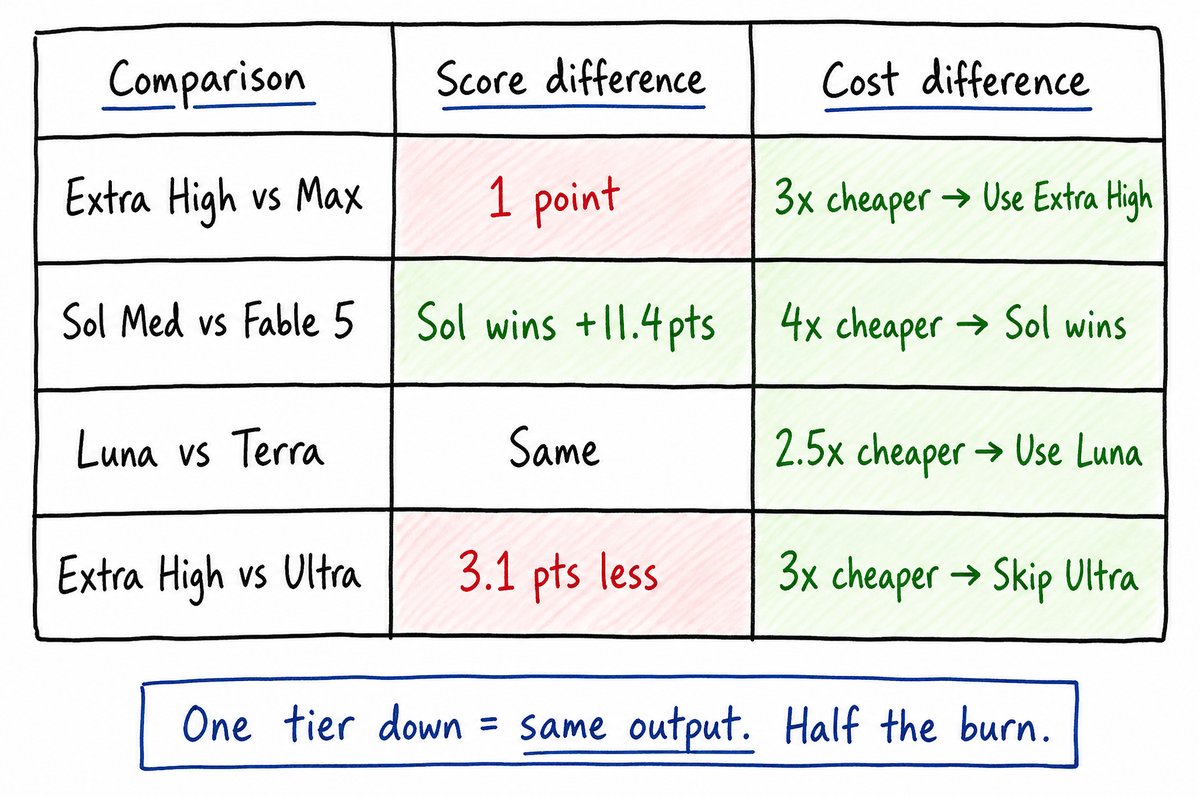
Sol Extra High vs Max:58 分 vs 59 分。只差 1 分。便宜 3 倍。用 Extra High。
Sol Medium vs Fable 5:Sol Medium 在 agent 工作流上赢 11.4 分。成本低 4 倍。
Luna Extra High vs Terra:性能相同。快 1.3 倍。便宜 2.5 倍。用 Luna。
Ultra vs Extra High:多 3.1 分。贵 3 倍。OpenAI 甚至没公布 Ultra 的 coding 结果。用 Extra High。
规律是:降一档 = 质量相同,价格大幅下降。
大多数开发者在所有事情上都跑高了一到两档。
这就是限额在 4 小时内消失的全部原因。
降一档。保持同样输出。把你的活跃窗口翻倍。
━━━━━━━━━━━━━━━━━━
前后对比
这套设置之前:
→ Sol Ultra 跑所有东西
→ Subagent 克隆父模型和 effort
→ 3 个 subagent = 3 个 Sol Ultra 实例同时燃烧
→ 5 小时窗口 90 分钟就没了
→ 不知道到底是什么烧掉了它
这套设置之后:
→ Sol Extra High 做编排者
→ Sol Medium 做实现
→ Luna Extra High 做扫描
→ max_depth = 1 阻止递归启动
→ AGENTS.md 告诉 Sol 不要自动启动 agent
→ 每个 prompt 里的停止点控制模型走多远
结果:连续工作 48 小时。零次撞上限额。
同样的 200 美元套餐。完全不同的体验。
━━━━━━━━━━━━━━━━━━
完整设置清单
现在就做这五件事:
→ 1. 打开 AGENTS.md。加入:"Only spawn subagents when I explicitly ask you to."
→ 2. 把 config.toml prompt 粘贴到 Codex。让它创建 3 个 agent 文件。
→ 3. 在 config.toml 里设置 max_depth = 1 和 max_threads = 6。
→ 4. 把你的默认 effort 切到 Sol High。不是 Ultra。也不是所有东西都用 Extra High。
→ 5. 给每个长时间运行的 prompt 加上明确停止点。
需要 10 分钟。
每周能替你省下数小时被烧掉的限额。
━━━━━━━━━━━━━━━━━━
还有一件事
花点时间看看 ~/.codex 和 ~/.claude。
这些目录才是真正力量所在。
自定义 agent。路由策略。模型偏好。默认指令。
大多数人从来不打开它们。
现在最能用好 Codex 的开发者?
他们做了一些当时看起来很蠢的改动,结果惊讶地发现影响巨大。
实验。调整。通过 Codex dashboard 监控你的使用量。
小的配置改动,会复合成截然不同的 token 消耗率。
这是用 AI 构建东西最有趣的时刻。
工具会奖励那些真正愿意钻进去的人。
━━━━━━━━━━━━━━━━━━
如果这篇帮你省下了限额:
→ 转发,让其他 Codex Pro 用户在又烧掉一个窗口之前看到它
→ 关注 @sairahul1,获取更多 AI 系统拆解
→ 收藏这篇——配置 prompt 是可用的,今晚就粘贴
订阅 theaibuilders.co,阅读更多这类有意思的文章
我写 AI、产品构建,以及那些无需你盯着也能运转的系统。